

The 5 Most Popular Bedroom Interior Styles Today
The bedroom is the most private space in a home. People spend nearly one third of their lives there, resting and recharging. Therefore, choosing a bedroom interior style is not only an aesthetic decision. It also directly affects sleep quality and the homeowner’s sense of relaxation. Below are the 5 most popular bedroom interior styles today. Each section covers the origin, the defining features, and the types of spaces that suit the style.
1. Modern Bedroom Interior

The Modern style emerged in the early 20th century and originates from the Bauhaus movement in Germany in the 1920s. This movement promoted the principle that “form follows function.” It removed unnecessary decoration and favored clean lines and industrial materials. By the second half of the 20th century, Modern style had spread worldwide. Today, it is the most common design language in contemporary architecture and interior design.
Modern bedroom interiors prioritize minimalism, tidiness, and comfort. The main colors are neutral tones such as white, gray, beige, and earth brown. Furniture has straight lines and few carved patterns. Beds sit low to the floor, while built in wardrobes or sliding doors save space. Lighting also plays an important role. Designers often combine recessed ceiling lights, LED strip lights, and bedside lamps to create depth.
Modern bedrooms are highly flexible. They suit most types of spaces, from small apartments and townhouses to villas. They work especially well in bedrooms with limited floor area, because a minimalist design makes the room look larger than it is.
2. Scandinavian Bedroom Interior
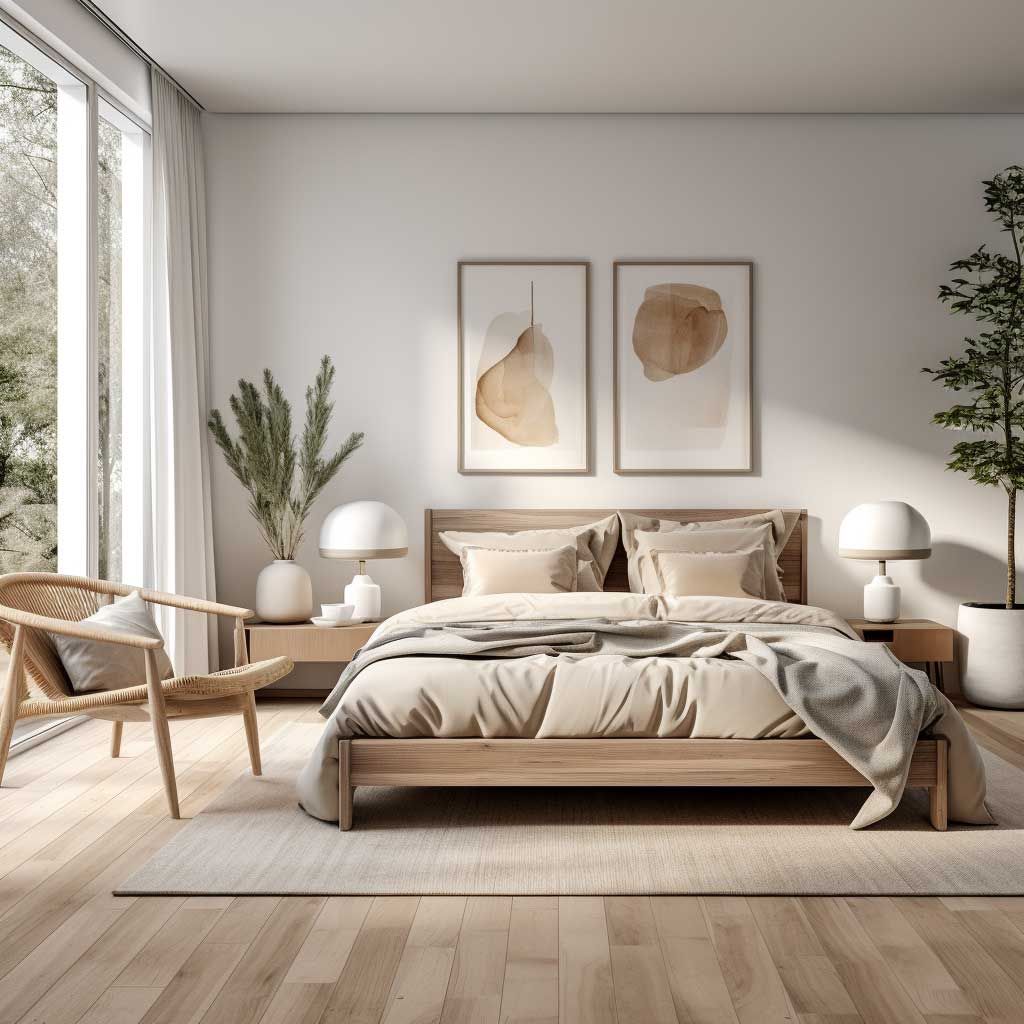
The Scandinavian style comes from the Nordic countries of Sweden, Norway, Denmark, and Finland. It developed strongly from the 1950s. The harsh climate, with long winters and little sunlight, shaped this style. Nordic people designed living spaces to maximize natural light. They also used warm materials close to nature and created a feeling of “hygge,” a sense of coziness, comfort, and safety indoors.
The main colors are white, cream, light gray, and beige. Light colored woods such as birch, pine, and white oak appear often. They create warmth without heaviness. Scandinavian bedrooms usually feature many plants and soft textiles such as linen, cotton, and wool. Large windows maximize natural light.
This style suits apartments, modern townhouses, and any space with plenty of natural light. It is ideal for young families and for people who love refined, gentle design that never feels distant.
3. Japandi Bedroom Interior
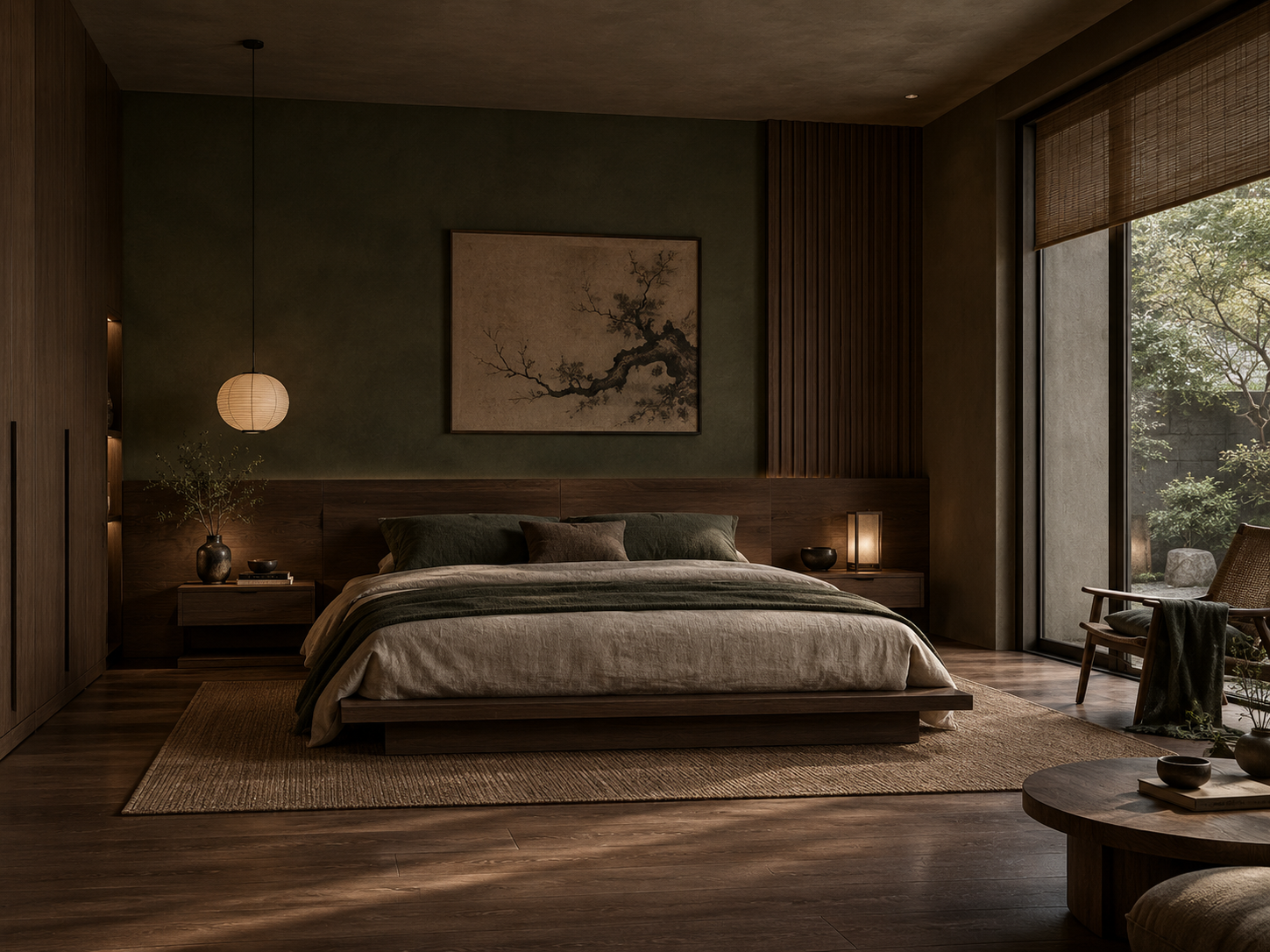
Japandi blends Japanese aesthetic philosophy with Scandinavian style. It formed through the cultural exchange between two design traditions that share much in common. Both value minimalism, function, and a connection to nature. The style rose strongly in the late 2010s. It remained one of the leading global trends in 2025.
Japandi carries the clean lines of Northern Europe, yet it adds the philosophical depth of Japan through the concept of “wabi sabi.” This concept finds beauty in imperfection and in the passing of time. The color palette is deeper than Scandinavian: dark brown, soft black, moss green, and dark wood. The room has little furniture, but each piece is carefully chosen. The space always feels calm and meditative.
Japandi suits high end apartments, modern townhouses, and villas whose overall architecture is refined and simple. It is especially suitable for homeowners who love quiet spaces and have a refined aesthetic taste.
4. Indochine Bedroom Interior

The Indochine style emerged from the cultural exchange between France and Southeast Asian countries (Vietnam, Cambodia, and Laos) during the colonial period of the late 19th and early 20th centuries. It is a special blend of classical French architecture and interiors with the best of Asian craftsmanship. Its signature elements include tropical wood, rattan and bamboo, and decorative patterns with strong local identity.
Indochine bedrooms use plenty of dark wood (teak and rosewood), rattan, bamboo, and silk fabrics. Printed patterns draw inspiration from Asian culture. The tones are warm: earth brown, bronze gold, and deep red, combined with classic metal details. The space feels luxurious and nostalgic, yet it stays close and warm. This is completely different from the cold look of European neoclassical style.
Indochine suits villas, large private homes, resorts, and high end hotels. In Vietnam, many homeowners love this style because it fits the local culture and the tropical climate. However, the room needs enough space. Otherwise, the rich interior details can make it feel cramped.
5. Neoclassical Bedroom Interior

The Neoclassical style emerged in 18th century Europe as a selective revival of ancient Greek and Roman art and architecture. When applied to modern interiors, neoclassical “strips away” the most elaborate details of pure classical style. This makes it fit contemporary living better. Even so, it keeps its distinctive luxury, symmetry, and refinement.
The main colors are ivory white, gold, gray, and soft pastels. Typical details include ceiling moldings, paneled doors, headboards with gentle carved patterns, gold framed mirrors, and crystal chandeliers. The layout is symmetrical and balanced, and it always feels luxurious and high class.
Neoclassical suits villas, high end townhouses, and large penthouse apartments. The style requires a high enough ceiling (at least 3m) and enough space for the decorative details to breathe and show their full aesthetic value. It does not suit small spaces, because they easily feel cramped and heavy.
6. Interior Materials: The Optimal Choice for Every Design Style
Whichever of the 5 styles you choose, the wardrobe system, bedside tables, and decorative wall panels always determine the overall look and durability of the bedroom. This is also where construction materials play a key role. A set of cabinets may look beautiful when first completed. However, if it swells and peels after a few years, it ruins the whole space the homeowner worked so hard to build.
DAPro Cabinet panels and Celuka foam boards are made from high density virgin PVC. They offer a wide range of colors and surface patterns, from elegant glossy white and modern light gray to light wood grain and dark wood grain. This variety lets DAPro materials adapt flexibly to every bedroom style. Homeowners and interior workshops do not need to change their construction process or invest in extra equipment.
However, the real difference of DAPro materials goes beyond aesthetics. The bedroom is an enclosed space, used continuously for 6 to 8 hours every night. Air quality and material durability directly affect the user’s health. From that angle, premium PVC plastic offers three technical advantages that MDF and MFC engineered wood struggle to deliver at the same time.
First, it offers absolute moisture resistance through its molecular mechanism. The PVC polymer structure has no moisture absorbing hydroxyl groups like the cellulose in wood. As a result, cabinets and wall panels do not swell, warp, or peel, even in prolonged humid conditions. This problem is very common in bedrooms next to bathrooms and in provinces with humid climates.
Second, it emits no formaldehyde. MDF uses urea formaldehyde glue in production. In contrast, DAPro Cabinet panels and Celuka foam boards contain no such substance. This protects the air quality in the bedroom, which is especially important for children’s rooms and for elderly users.
Third, the surface keeps its color, cleans easily, and needs no periodic maintenance. Therefore, the bedroom cabinet system keeps its original beauty for many years of use.
Conclusion
Each bedroom interior style carries its own aesthetic philosophy and history. Modern suits flexible spaces. Scandinavian brings light and warmth into the room. Japandi creates a refined, meditative space. Indochine connects with familiar Asian identity. Meanwhile, Neoclassical affirms its class through every detail.
Choosing the right style does not mean copying a trend. Instead, it means finding the visual language that best fits each homeowner’s personality, lifestyle, and real space conditions. When style and materials are chosen together, the bedroom looks good not only in the first months after completion. It also keeps its beauty and practical value for many years to come.