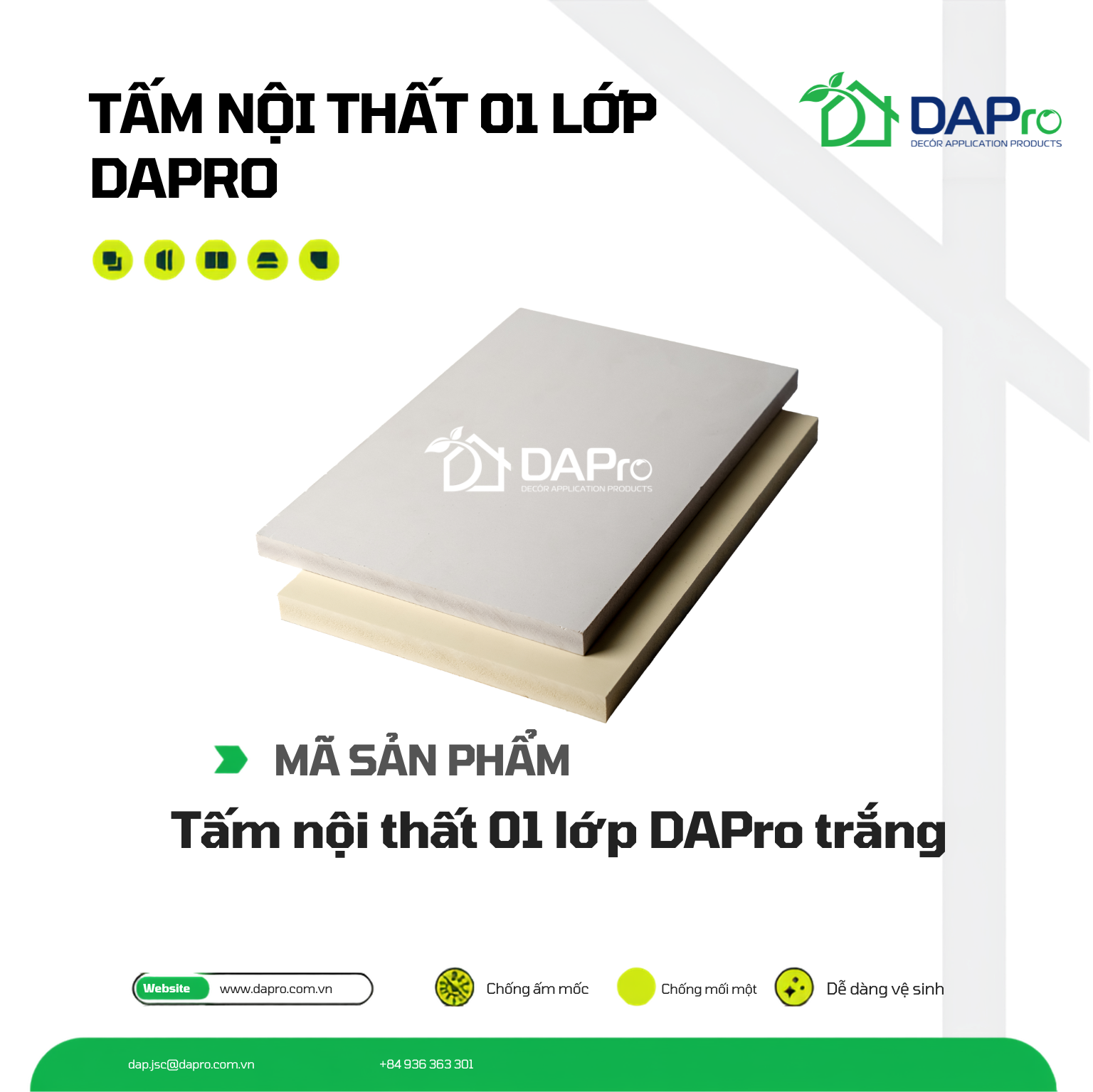
What is DAPro Celuka Foam Board?
DAPro Celuka Foam Board is a lightweight yet rigid material line, manufactured from virgin PVC resin combined with foaming agents and specialized additives, meeting strict standards of quality and durability in the furniture industry. The product is recyclable, safe for users, and aligned with sustainable development trends.
Production Process of DAPro Celuka Foam Board
DAPro foam boards are manufactured on modern technology production lines. The PVC compound combined with foaming agents and specialized additives is heated at high temperature to form a stable foam structure, then extruded by high capacity extruders, shaped in forming molds, and cooled in a closed loop process. After extrusion, the melted material flows through the mold, is formed into boards, and passes through the cooling system to produce the finished panels. At this stage, cutting machines cut the boards to customer requirements, producing panels of uniform dimensions, finished surfaces, and consistent quality.

Key Features of DAPro Celuka Foam Board

1. MOISTURE & MOLD RESISTANT

2. TERMITE RESISTANT

3. EASY TO PROCESS, LOW COST CONVERSION TO FINISHED PRODUCTS

4. FORMALDEHYDE FREE, SAFE TO USE

5. 40% TO 50% LIGHTER THAN MDF, OPTIMIZED LOGISTICS AND INSTALLATION COSTS

6. FIRE SPREAD RESISTANT

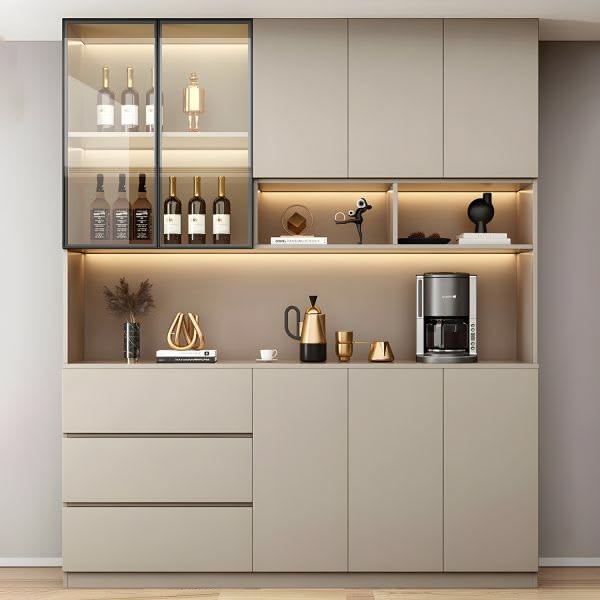
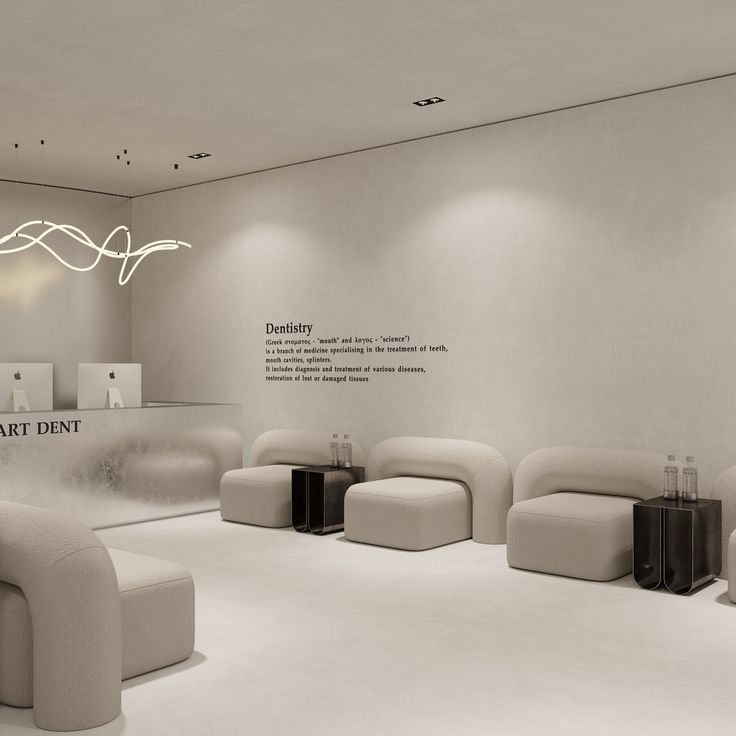
7. VERSATILE APPLICATIONS, SERVING MANY CUSTOMER SEGMENTS
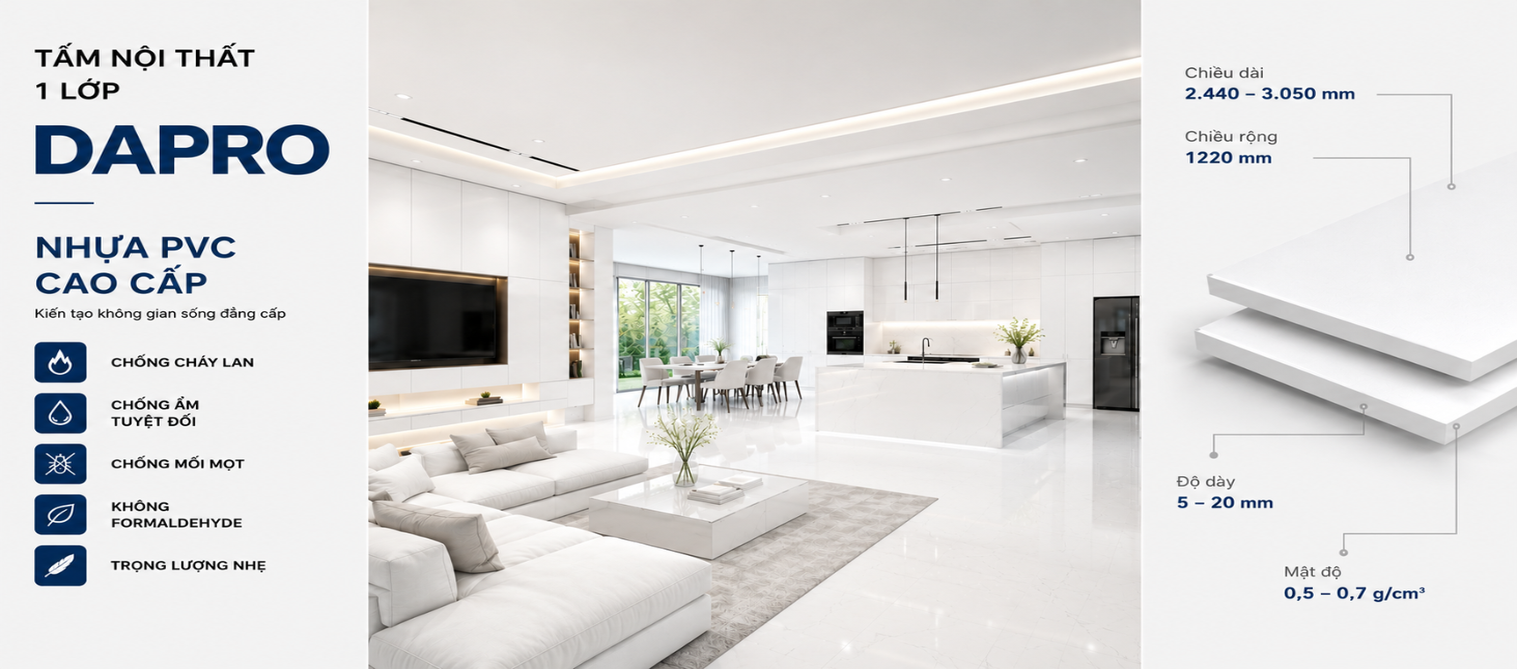
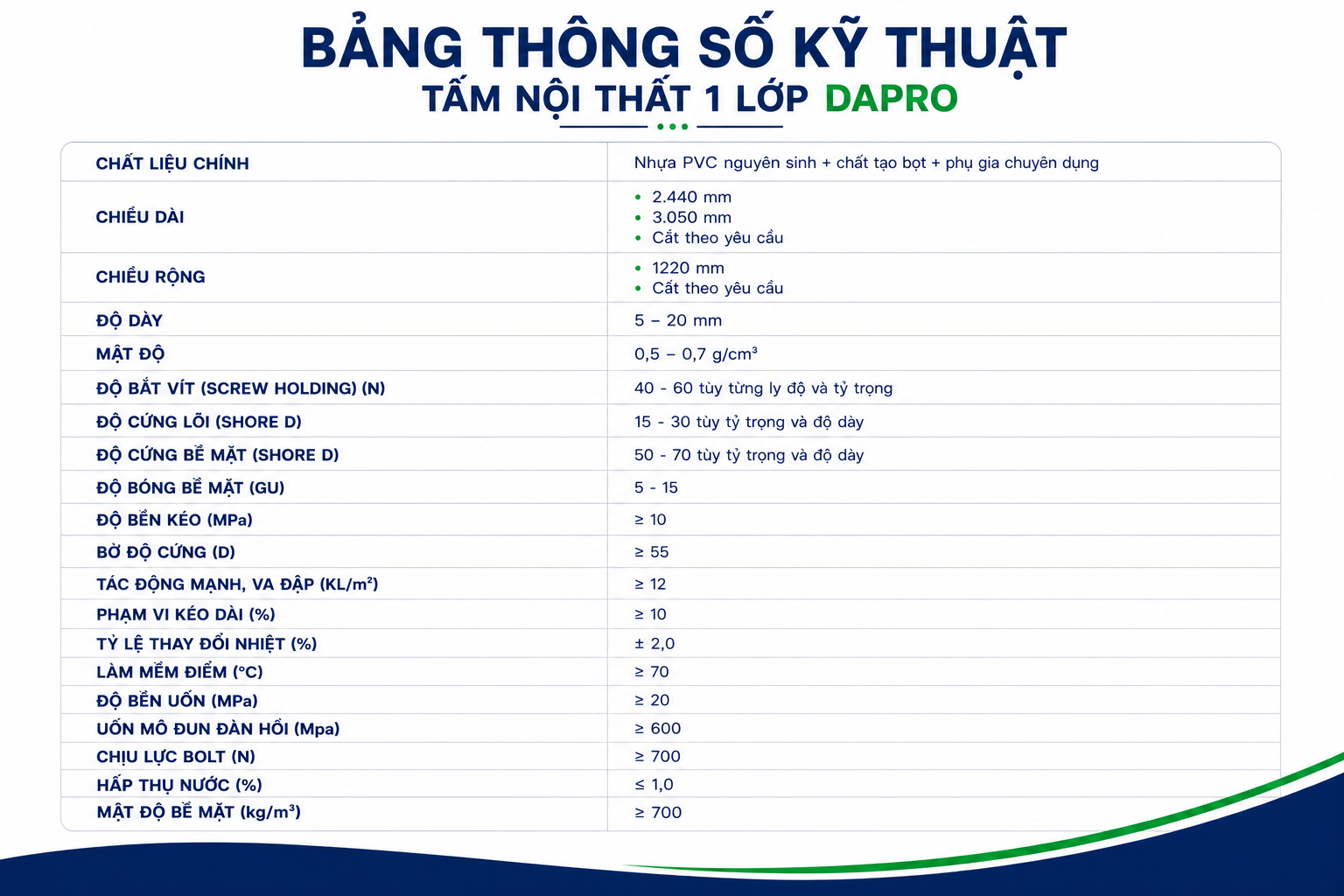
Technical Specifications of DAPro Celuka Foam Board
Frequently Asked Questions About DAPro Celuka Foam Board
How does DAPro Celuka Foam Board differ from DAPro Co-extruded Foam Board?
- The co-extruded foam board offers higher rigidity and a glossier, more refined surface, and is typically used in premium projects, serving the high end segment at a higher price point. Meanwhile, the celuka foam board suits the mainstream segment at a reasonable price while still providing full moisture resistance, termite resistance, and formaldehyde free properties. In construction formwork applications, the co-extruded board is usually preferred over the celuka board because its smooth, flat surface is not corroded by concrete alkalization and does not shrink, chip, or warp during construction.
How does DAPro Celuka Foam Board differ from natural wood, MDF, and traditional materials?
- DAPro Celuka Foam Board has a density 40% to 50% lower than MDF, significantly reducing transportation and installation costs. Unlike natural wood and MDF, which are prone to mold, termites, and formaldehyde emissions from adhesives, DAPro foam boards are absolutely moisture proof, completely termite resistant, and emit no formaldehyde. While natural wood and MDF typically show noticeable degradation after 3 to 5 years in humid environments, DAPro foam boards maintain stable quality throughout their service life without periodic maintenance.
Can DAPro Celuka Foam Board be used outdoors?
- It can be used for certain short term outdoor applications such as signage and exhibition backdrops. However, for long term outdoor use, please consult us about the product line best suited to the specific weather conditions of each project.
Can DAPro Celuka Foam Board be painted or covered with decals?
- Absolutely. The surface of DAPro foam boards can be painted, covered with decals, or UV printed directly, making them suitable for advertising and interior decoration applications requiring custom colors and imagery.